


 https://hendricksfamilyfoundation.org/wp-content/uploads/2026/05/go_beyond_grades_beloit.jpg
675
1000
Richard McGrath
https://hendricksfamilyfoundation.org/wp-content/uploads/2023/06/hendricks_family_foundation_logo_wht.png
Richard McGrath2026-05-12 16:22:212026-08-06 16:47:34Go Beyond Grades Beloit
https://hendricksfamilyfoundation.org/wp-content/uploads/2026/05/go_beyond_grades_beloit.jpg
675
1000
Richard McGrath
https://hendricksfamilyfoundation.org/wp-content/uploads/2023/06/hendricks_family_foundation_logo_wht.png
Richard McGrath2026-05-12 16:22:212026-08-06 16:47:34Go Beyond Grades BeloitWhat We Fund
Education
Improving educational outcomes for children in the City of Beloit.
Increasing choices and educational options available to Beloit families.
Improving educational outcomes for children in the City of Beloit.
Increasing choices and educational options available to Beloit families.
Go Beyond Grades Beloit

When families have clear information and supportive tools, they can be their child’s best advocate and partner confidently with the teacher to support their child’s learning at home and at school. Go Beyond Grades Beloit is a community-led public awareness campaign designed to help families better understand grade-level expectations in reading and math and strengthen the home–school partnership.
Informed by research showing that report card grades and parent perceptions can differ from state assessment results, the campaign encourages families and educators to look at grades, classroom work, and standardized test data together to get a clearer picture of whether students are on track and where additional support may be needed.
“Statewide research shows more than 80% of Wisconsin parents believe their child is performing at or above grade-level in math or reading. In Beloit, just over 30% of students are currently meeting grade-level benchmarks on state tests in these subjects.* ”
A broad coalition of local community organizations and education partners are helping to ensure Beloit parents have access to this information by connecting families throughout the community to Go Beyond Grades Beloit resources.
Go Beyond Grades is an initiative of Learning Heroes, a national nonprofit organization dedicated to strengthening the relationship between families and schools so that every child can succeed. Go Beyond Grades Beloit is supported by philanthropic funding from The Hendricks Family Foundation and the Oak Foundation, which supports the campaign’s resources related to students with learning differences.
*State-reported district-level proficiency rates for the School District of Beloit, Beloit Turner School District and The Lincoln Academy (rates were combined using a weighted average based on the number of students tested in each district).
Go Beyond Grades Beloit
When families have clear information and supportive tools, they can be their child’s best advocate and partner confidently with the teacher to support their child’s learning at home and at school. Go Beyond Grades Beloit is a community-led public awareness campaign designed to help families better understand grade-level expectations in reading and math and strengthen the home–school partnership.
Informed by research showing that report card grades and parent perceptions can differ from state assessment results, the campaign encourages families and educators to look at grades, classroom work, and standardized test data together to get a clearer picture of whether students are on track and where additional support may be needed.
“Statewide research shows more than 80% of Wisconsin parents believe their child is performing at or above grade-level in math or reading. In Beloit, just over 30% of students are currently meeting grade-level benchmarks on state tests in these subjects.* ”
A broad coalition of local community organizations and education partners are helping to ensure Beloit parents have access to this information by connecting families throughout the community to Go Beyond Grades Beloit resources.
Go Beyond Grades is an initiative of Learning Heroes, a national nonprofit organization dedicated to strengthening the relationship between families and schools so that every child can succeed. Go Beyond Grades Beloit is supported by philanthropic funding from The Hendricks Family Foundation and the Oak Foundation, which supports the campaign’s resources related to students with learning differences.
*State-reported district-level proficiency rates for the School District of Beloit, Beloit Turner School District and The Lincoln Academy (rates were combined using a weighted average based on the number of students tested in each district).
The Lincoln Academy
The Lincoln Academy (TLA) is a K4-12 grade independent charter school located in Beloit. An innovative, high-quality, free public school option that developed out of a community-level commitment to improve academic achievement and preparedness of Beloit students for life after high school, TLA’s vision is to be the premier K4-12 school in Wisconsin, providing college and career pathways for scholars to lead happy, choice-filled lives.
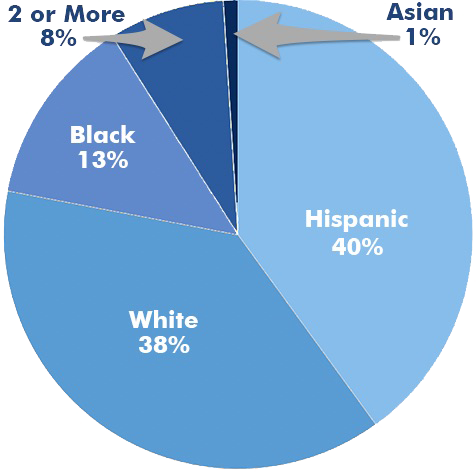
The school is committed to reflecting the diversity of the Beloit community and has embedded the lived school values of: Children First, Trusting Community, Get It Done, Find the Joy and Community Focus into the environment.
Chartered through the University of Wisconsin Office of Educational Opportunity in 2020, TLA serves more than 700 scholars and has a 4-star rating of Exceeds Expectations from the Wisconsin Department of Public Instruction based upon the 2024-2025 school report card, the most current report card available.

The Lincoln Academy
The Lincoln Academy (TLA) is a K4-12 grade independent charter school located in Beloit. An innovative, high-quality, free public school option that developed out of a community-level commitment to improve academic achievement and preparedness of Beloit students for life after high school, TLA’s vision is to be the premier K4-12 school in Wisconsin, providing college and career pathways for scholars to lead happy, choice-filled lives.
The school is committed to reflecting the diversity of the Beloit community and has embedded the lived school values of: Children First, Trusting Community, Get It Done, Find the Joy and Community Focus into the environment.
Chartered through the University of Wisconsin Office of Educational Opportunity in 2020, TLA serves more than 700 scholars and has a 4-star rating of Exceeds Expectations from the Wisconsin Department of Public Instruction based upon the 2024-2025 school report card, the most current report card available.








“I truly love TLA. I tell everyone how awesome my scholar is doing academically!”
“I truly love TLA. I tell everyone how awesome my scholar is doing academically!”
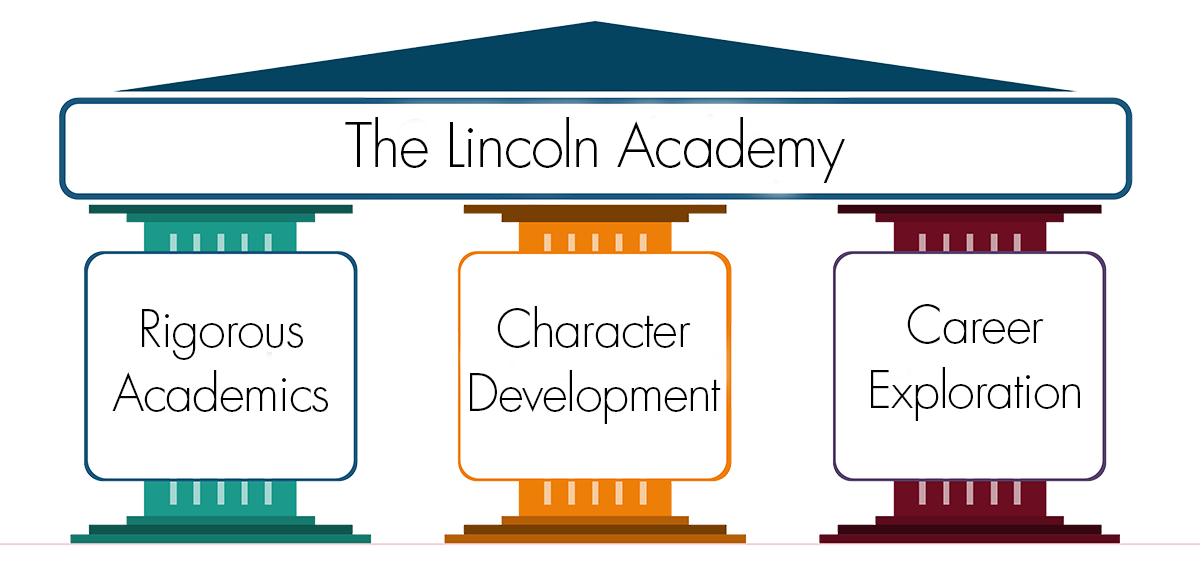
TLA is grounded in a focus on three pillars.
The project-based, experiential learning model utilized at TLA integrates all three pillars into the curriculum at every grade-level.
Academic Rigor
The school’s unique instructional model is designed to ensure scholars receive extended instruction, an integrated reading/writing curriculum and targeted intervention, as needed, each day.
- TLA schoolwide 2024-2025 NWEA MAP Results exceeded individual growth targets in reading and math by an average of 27%. Class growth targets were achieved in both areas.
- Schoolwide, MAP Reading growth was in the 95th percentile and Math growth was in the 99th percentile of all schools across the country.
- 9 dual enrollment courses were offered at TLA during the 2024-2025 school year, with 460 college credits earned, representing $70,000 in scholar college savings.
- 96% attendance rate.
HIDDEN – PRIOR YEAR
The school’s unique instructional model is designed to ensure scholars receive extended instruction, an integrated reading/writing curriculum and targeted intervention, as needed, each day.
- TLA schoolwide 2023-2024 NWEA MAP Results exceeded individual growth targets in reading and math by an average of 13.5%. Class growth targets were achieved in both areas.
- 75% of K5–3rd grade scholars achieved proficiency in foundational reading skills.
- 40% of 9–11th grade scholars were on the honor roll during the 4th Quarter.
HIDDEN — PRIOR YEAR
The school’s unique instructional model is designed to ensure scholars receive extended instruction, an integrated reading/writing curriculum and targeted intervention, as needed, each day.
- TLA school wide 2022-2023 NWEA MAP Results exceeded individual growth targets by an average of 14.5% and class growth targets by an average of 16.5% in reading and math.
- 71% of K5-4th grade scholars achieved proficiency in foundational reading skills.
- 41% of 9th and 10th grade scholars were on the honor roll during the 4th Quarter.
Character Development
Character development embodies monthly virtues and a focus on citizenship and service. TLA’s 10 virtues are infused in all curricular content and taught through direct instruction in class and during weekly school assemblies.
- 1,235 Character Awards were granted to scholars who built relationships in the school community, relied on virtues to make good decisions, and understood foundational concepts of the virtues.
- Scholars undertook 3,250 hours of Service Learning.
- Leading Lions, select scholars at each grade level excelling in all three of TLA’s pillars, were also recognized.
HIDDEN — 2023-2024 School Year
Character development is integrated through a focus on character virtues infused in all curricular subject content and taught through direct instruction.
- 827 Character Awards.
- Scholars undertook 2,250+ hours of Service Learning.
HIDDEN — 2022-2023 school year
Character development is integrated through a focus on character virtues infused in all curricular subject content and taught through direct instruction.
- 827 Character Awards.
- Scholars undertook 2,000+ hours of Service Learning.
Additional details about the most recent school year at The Lincoln Academy can be found here.

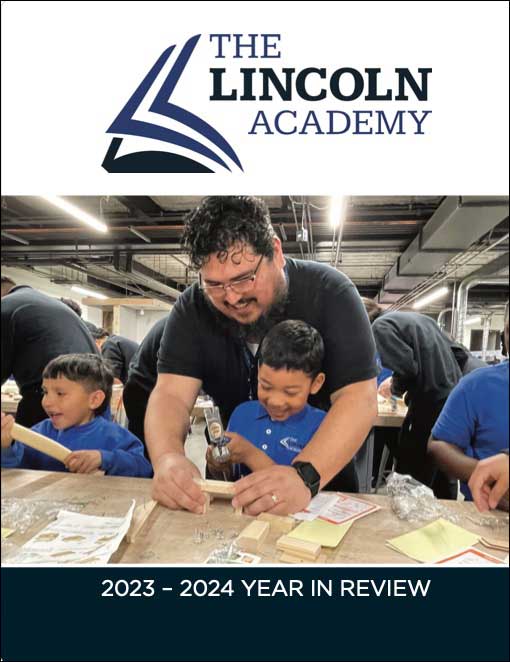

Additional details about the most recent school year at The Lincoln Academy can be found here.
The Foundation’s Education priority is focused on strategies that improve educational outcomes for Beloit children and increase choices and educational options available to Beloit families. We, along with many others, have grown increasingly concerned about educational outcomes in our city and have worked with community members from every corner of Beloit to bring TLA to life.
Through its investment of time, talent and resources in The Lincoln Academy, including making a significant financial commitment to closing the per pupil funding gap that creates an ongoing challenge for independent charter schools, the Foundation helps to ensure local scholars are provided an environment conducive to the learning process; proving what is possible when scholars are given the right combination of school culture, strong academics, career integration and a mission-driven staff.


The Foundation’s Education priority is focused on strategies that improve educational outcomes for Beloit children and increase choices and educational options available to Beloit families. We, along with many others, have grown increasingly concerned about educational outcomes in our city and have worked with community members from every corner of Beloit to bring TLA to life.
Through its investment of time, talent and resources in The Lincoln Academy, including making a significant financial commitment to closing the per pupil funding gap that creates an ongoing challenge for independent charter schools, the Foundation helps to ensure local scholars are provided an environment conducive to the learning process; proving what is possible when scholars are given the right combination of school culture, strong academics, career integration and a mission-driven staff.
School District of Beloit Pilot Project
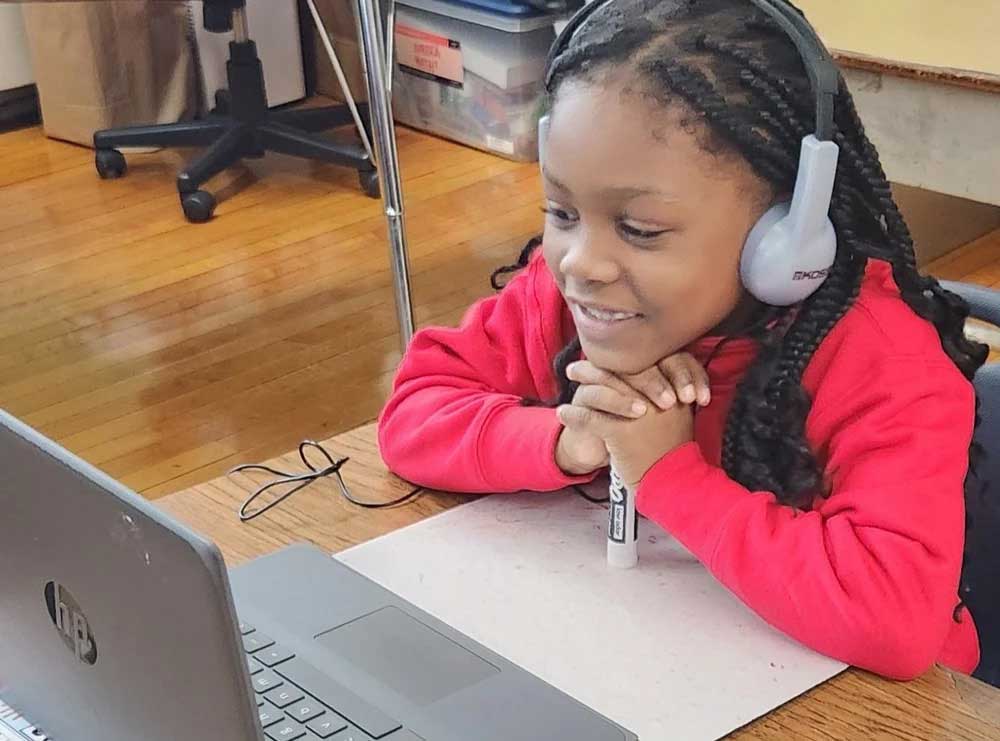
The Hendricks Family Foundation believes deeply in the potential of Beloit’s children. We love this city, believe every child deserves the chance to soar, and are committed to improving educational opportunities and outcomes for children in our community.
Beginning with the 2026-2027 school year, the Foundation will be partnering with the School District of Beloit in an effort to improve academic and school outcomes at two elementary schools, with intensive interventions directed at improving 3rd grade literacy.
The Foundation and School District of Beloit will partner on a three-year pilot project, with funding contingent on meaningful annual progress, at Converse Elementary School and Gaston Elementary School. The pilot will include three primary components at each school:
-
- School-wide coaching focused on leadership, instruction, and school culture.
- 60 slots of high-impact, one-on-one tutoring for 1st-3rd graders.
- Defined staff incentives for meeting school-wide goals.
Originally proposed as a one-school pilot, the Foundation and School District of Beloit collaborated to expand the project to include two schools based on the demonstrated interest by both school teams. The estimated investment for the two-school project exceeds $3.5 million over the three-year period. The School District of Beloit will directly fund tutoring support at one school. The Hendricks Family Foundation will fund the balance.
— HIDDEN —
Regular Board Meeting
January 26, 2026
minute mark 33:34
Regular Board Meeting
December 16, 2025
minute mark 17:52
Pilot Project FAQ’s
1. Who will be paying for the cost of this pilot project?
The Hendricks Family Foundation.
2. Will the Foundation be giving $2.5 million to the school district?
No. The School District of Beloit would enter into no-cost contracts with OpenLiteracy and Skyrocket, with the Foundation paying the vendors directly for the costs associated with the contracts. Funds associated with the school-wide staff bonus would be made available to the district for the awards if objectives are achieved.
The total cost of the project represents three years of expenses associated with each of the three primary components of the project, not just tutoring.
3. Why is the unanimous approval of the Board of Education required as a condition of moving forward with the pilot project? Why not wait until new board members are seated in April?
The part of our proposal that seems to have generated the most attention is our request for unanimous approval by the Board of Education. Our rationale – we have found from previous work that opposition can (and does) undermine implementation, and a no vote is a signal of opposition. This is not only true for the school board but for the Hendricks Family Foundation board and a range of important stakeholders – district administration, principals, teachers and the teachers union. If you review the core materials regarding the proposal linked above, you will see that buy-in is a key provision of our partnership offer. It will be essential for success.
We realize there are a significant number of operating questions/concerns about how this project gets implemented in a school. We are committed to having an ongoing, collaborative “how” conversation with district administration and school staff that allows for the development and implementation of a meaningful project with high fidelity. To get to this place, we are asking the Board of Education to indicate support for the “what” at the policy level.
4. Why implement this pilot project at only one school?
This project is not intended to be a district-wide “solution” to academic achievement. It is intended to provide an opportunity to test the impact of research-based, best practice, turnkey interventions with minimal financial risk to the district. If effective, it could inform scalable and sustainable options for the district moving forward.
5. Why high-impact tutoring?
Research shows high-impact tutoring, tutoring that is delivered three or more times per week by consistent, trained tutors using quality materials and data to inform instruction, is one of the most effective academic interventions, providing an average of more than four months of additional learning in elementary literacy.
If you’re interested in learning more about the research behind and best practices around tutoring and high-impact tutoring interventions, click on this link to the National Student Support Accelerator, a program of the SCALE Initiative at Stanford University.
6. Is a community-based tutoring model just as effective as a tutoring program led by certified teachers?
Tutoring as a general intervention (whether led by volunteers, paraprofessionals or teachers) is shown to positively impact student learning.
High-quality research consistently shows that tutoring delivered by certified teachers or trained paraprofessionals, especially when delivered regularly and during the school day, produces significantly stronger academic gains than tutoring provided by volunteers such as community members, parents or untrained staff, which results in effects that are smaller and more inconsistent. [edworkingpapers.com] [psycnet.apa.org]
Digging deeper into the research, for students with reading difficulties, tutoring is most effective when delivered by trained educators – not volunteers or minimally trained staff. This finding is remarkably consistent across decades of meta-analyses. Students with the most severe reading gaps require the most specialized instruction. [Wanzak et al. (2016)] [Wanzak et al. (2018)] [Scammacca et al. (2007)] [Scammacca et al. (2015)]
Why Certified Teachers Matter
-
- Stronger instructional expertise
- Better curriculum alignment
- More consistent implementation
- Higher overall effect sizes in both math & reading
7. Will a virtual format be effective?
Yes. What matters most is the quality and expertise of the tutor. A virtual program staffed by certified teachers preserves the strongest element identified in research: high quality instruction.
8. What’s the goal of this tutoring program?
To give every participating student access to the most effective tutoring model available, so they can make meaningful, accelerated progress.
9. Which students will receive high-impact tutoring?
The project will provide for 60 slots of high-impact tutoring for 1 st – 3 rd grade students. Although this intervention is effective throughout elementary grades, research indicates 1 st grade is the sweet spot for literacy tutoring. Given the project focus on 3 rd grade literacy, 1 st – 3 rd graders will be targeted for the intervention. The school will determine eligibility criteria for the slots, and which students will participate. More than 60 students are expected to receive high-impact tutoring throughout the course of the school year based upon students rotating out due to grade-level achievement or lack of attendance, allowing for new/additional students to enter the tutoring program.
Note: The Foundation considered a larger number of tutoring slots, however in working with OpenLiteracy we determined that it was important to propose a manageable number of slots to help ensure successful implementation.
10. Why have OpenLiteracy & Skyrocket been selected as the vendors?
OpenLiteracy has designed their program around research-backed characteristics recognized by the National Student Support Accelerator and has demonstrated experience implementing similar programs in schools/districts with achievement gaps and demographics similar to Beloit. In addition:
- OpenLiteracy has prior experience working with a philanthropically supported effort in partnership with the Oakland School District.
- OpenLiteracy uses certified teachers in their work with students.
- OpenLiteracy routinely engages in on-going evaluation to assess their effectiveness and impact, and they have a well-developed data dashboard that provides school/teachers with detailed data and resources.
- Conversations with schools and organizations working with OpenLiteracy indicate consistently excellent customer service and a highly supportive partnership relationship.
The Lincoln Academy has a well-established 5-year relationship with Skyrocket Education. Their work is anchored in years of research, leadership and teaching best practices and coaching is designed to fit the needs of the individual school. Working with school leaders and teachers, individualized coaching supports educators in consistently and effectively executing the competencies that support students’ ability to thrive in a learning environment that is rigorous, predictable and growth oriented.
11. What are the conditions for moving forward with the pilot project?
- Unanimous approval of the Board of Education.
- Buy-in and engagement from the Superintendent and district instructional leaders.
- A commitment to collaboratively evaluate the effectiveness of interventions including access to data (aggregated).
- Constructive engagement with all key stakeholders.
- An agreement not to reallocate resources away from the selected school to another as a result of the pilot unless agreed to by all key stakeholders.
- Commitments from the selected elementary school team, including the following:
- A vision for change from the principal to grade-level teams.
- A willingness to change adult practices, not just student behaviors, including adult learning, summer training, ongoing PD, teacher coaching and real-time feedback.
- Consistent systems to address behavior and instructional routines based on the Skyrocket model.
- Transparent use of data to drive improvement.
- Strong, predictable, schoolwide culture.
- Collaborative team structures.
- Transparent, collaborative leadership.
- Persistence.
12. How will this project engage parents/families?
Parent/family voice and engagement are important in the proposed work. The two primary components of the project will provide several different opportunities for the district/school to engage parents/families (and vice versa).
The tutoring program provides opportunities to engage with parents/families:
-
- To share information about the tutoring program
- To remain connected around attendance expectations
- To share information about how the student is progressing, and
- To provide information and resources to parents/families about how to help support learning and progress.
Schoolwide leadership coaching, while not specific to the issue of parent engagement, can drive/support work around any issue/activity school leadership is looking to impact – including focused work around parent engagement.
13. How and how often will you assess the pilot project’s impact?
While all stakeholders will work collaboratively to formally define measurable outcomes related to both the high-impact tutoring and the coaching & professional development, we will encourage the district to identify measures that will support them in improving practices that increase academic outcomes for students. Examples of possible outcome measures have been provided in the core materials linked above. Implementation will be evaluated on an ongoing basis and formal outcome measures will be evaluated at the end of semester and annually.
14. Why all the conditions, outcome measures and assessment requirements?
Most HFF funded projects require a grant agreement, identified outcome measures and regular reporting on both outcome measures and budget/financial operations over the period of the project. The proposed structure of this pilot differs from most of our grants in only two ways:
- The Foundation has done much of the up-front proposed project development work because we approached the district about the project (not the other way around); and
- The Foundation is offering a no-cost contract to the district and thus will be paying the two primary vendors directly.
15. Will the pilot project look the same each of the three years?
It is possible that adjustments will be made during the duration of the project based on ongoing assessment and learning.
16. Why would the Foundation provide funding for this project when it also supports The Lincoln Academy?
The Foundation believes deeply in the potential of Beloit’s children and is committed to improving educational opportunities and outcomes for children in our community – all children. We believe it is possible to support The Lincoln Academy and partner with the district to create opportunities to assess intervention strategies that support increased student learning.
School District of Beloit
Pilot Project
The Hendricks Family Foundation believes deeply in the potential of Beloit’s children. We love this city, believe every child deserves the chance to soar, and are committed to improving educational opportunities and outcomes for children in our community.
Beginning with the 2026-2027 school year, the Foundation will be partnering with the School District of Beloit in an effort to improve academic and school outcomes at two elementary schools, with intensive interventions directed at improving 3rd grade literacy.
The Foundation and School District of Beloit will partner on a three-year pilot project, with funding contingent on meaningful annual progress, at Converse Elementary School and Gaston Elementary School. The pilot will include three primary components at each school:
-
- School-wide coaching focused on leadership, instruction, and school culture.
- 60 slots of high-impact, one-on-one tutoring for 1st-3rd graders.
- Defined staff incentives for meeting school-wide goals.
Originally proposed as a one-school pilot, the Foundation and School District of Beloit collaborated to expand the project to include two schools based on the demonstrated interest by both school teams. The estimated investment for the two-school project exceeds $3.5 million over the three-year period. The School District of Beloit will directly fund tutoring support at one school. The Hendricks Family Foundation will fund the balance.
— HIDDEN —
YouTube links to project-related School District of Beloit Board Meetings or relevant committee meetings:
Regular Board Meeting
December 16, 2025
minute mark 17:52
Regular Board Meeting
January 26, 2026
minute mark 33:34
Pilot Project FAQ’s
1. Who will be paying for the cost of this pilot project?
The Hendricks Family Foundation.
2. Will the Foundation be giving $2.5 million to the school district?
No. The School District of Beloit would enter into no-cost contracts with OpenLiteracy and Skyrocket, with the Foundation paying the vendors directly for the costs associated with the contracts. Funds associated with the school-wide staff bonus would be made available to the district for the awards if objectives are achieved.
The total cost of the project represents three years of expenses associated with each of the three primary components of the project, not just tutoring.
3. Why is the unanimous approval of the Board of Education required as a condition of moving forward with the pilot project? Why not wait until new board members are seated in April?
The part of our proposal that seems to have generated the most attention is our request for unanimous approval by the Board of Education. Our rationale – we have found from previous work that opposition can (and does) undermine implementation, and a no vote is a signal of opposition. This is not only true for the school board but for the Hendricks Family Foundation board and a range of important stakeholders – district administration, principals, teachers and the teachers union. If you review the core materials regarding the proposal linked above, you will see that buy-in is a key provision of our partnership offer. It will be essential for success.
We realize there are a significant number of operating questions/concerns about how this project gets implemented in a school. We are committed to having an ongoing, collaborative “how” conversation with district administration and school staff that allows for the development and implementation of a meaningful project with high fidelity. To get to this place, we are asking the Board of Education to indicate support for the “what” at the policy level.
4. Why implement this pilot project at only one school?
This project is not intended to be a district-wide “solution” to academic achievement. It is intended to provide an opportunity to test the impact of research-based, best practice, turnkey interventions with minimal financial risk to the district. If effective, it could inform scalable and sustainable options for the district moving forward.
5. Why high-impact tutoring?
Research shows high-impact tutoring, tutoring that is delivered three or more times per week by consistent, trained tutors using quality materials and data to inform instruction, is one of the most effective academic interventions, providing an average of more than four months of additional learning in elementary literacy.
If you’re interested in learning more about the research behind and best practices around tutoring and high-impact tutoring interventions, click on this link to the National Student Support Accelerator, a program of the SCALE Initiative at Stanford University.
6. Is a community-based tutoring model just as effective as a tutoring program led by certified teachers?
Tutoring as a general intervention (whether led by volunteers, paraprofessionals or teachers) is shown to positively impact student learning.
High-quality research consistently shows that tutoring delivered by certified teachers or trained paraprofessionals, especially when delivered regularly and during the school day, produces significantly stronger academic gains than tutoring provided by volunteers such as community members, parents or untrained staff, which results in effects that are smaller and more inconsistent. [edworkingpapers.com] [psycnet.apa.org]
Digging deeper into the research, for students with reading difficulties, tutoring is most effective when delivered by trained educators – not volunteers or minimally trained staff. This finding is remarkably consistent across decades of meta-analyses. Students with the most severe reading gaps require the most specialized instruction. [Wanzak et al. (2016)] [Wanzak et al. (2018)] [Scammacca et al. (2007)] [Scammacca et al. (2015)]
Why Certified Teachers Matter
-
- Stronger instructional expertise
- Better curriculum alignment
- More consistent implementation
- Higher overall effect sizes in both math & reading
7. Will a virtual format be effective?
Yes. What matters most is the quality and expertise of the tutor. A virtual program staffed by certified teachers preserves the strongest element identified in research: high quality instruction.
8. What’s the goal of this tutoring program?
To give every participating student access to the most effective tutoring model available, so they can make meaningful, accelerated progress.
9. Which students will receive high-impact tutoring?
The project will provide for 60 slots of high-impact tutoring for 1 st – 3 rd grade students. Although this intervention is effective throughout elementary grades, research indicates 1 st grade is the sweet spot for literacy tutoring. Given the project focus on 3 rd grade literacy, 1 st – 3 rd graders will be targeted for the intervention. The school will determine eligibility criteria for the slots, and which students will participate. More than 60 students are expected to receive high-impact tutoring throughout the course of the school year based upon students rotating out due to grade-level achievement or lack of attendance, allowing for new/additional students to enter the tutoring program.
Note: The Foundation considered a larger number of tutoring slots, however in working with OpenLiteracy we determined that it was important to propose a manageable number of slots to help ensure successful implementation.
10. Why have OpenLiteracy & Skyrocket been selected as the vendors?
OpenLiteracy has designed their program around research-backed characteristics recognized by the National Student Support Accelerator and has demonstrated experience implementing similar programs in schools/districts with achievement gaps and demographics similar to Beloit. In addition:
- OpenLiteracy has prior experience working with a philanthropically supported effort in partnership with the Oakland School District.
- OpenLiteracy uses certified teachers in their work with students.
- OpenLiteracy routinely engages in on-going evaluation to assess their effectiveness and impact, and they have a well-developed data dashboard that provides school/teachers with detailed data and resources.
- Conversations with schools and organizations working with OpenLiteracy indicate consistently excellent customer service and a highly supportive partnership relationship.
The Lincoln Academy has a well-established 5-year relationship with Skyrocket Education. Their work is anchored in years of research, leadership and teaching best practices and coaching is designed to fit the needs of the individual school. Working with school leaders and teachers, individualized coaching supports educators in consistently and effectively executing the competencies that support students’ ability to thrive in a learning environment that is rigorous, predictable and growth oriented.
11. What are the conditions for moving forward with the pilot project?
- Unanimous approval of the Board of Education.
- Buy-in and engagement from the Superintendent and district instructional leaders.
- A commitment to collaboratively evaluate the effectiveness of interventions including access to data (aggregated).
- Constructive engagement with all key stakeholders.
- An agreement not to reallocate resources away from the selected school to another as a result of the pilot unless agreed to by all key stakeholders.
- Commitments from the selected elementary school team, including the following:
- A vision for change from the principal to grade-level teams.
- A willingness to change adult practices, not just student behaviors, including adult learning, summer training, ongoing PD, teacher coaching and real-time feedback.
- Consistent systems to address behavior and instructional routines based on the Skyrocket model.
- Transparent use of data to drive improvement.
- Strong, predictable, schoolwide culture.
- Collaborative team structures.
- Transparent, collaborative leadership.
- Persistence.
12. How will this project engage parents/families?
Parent/family voice and engagement are important in the proposed work. The two primary components of the project will provide several different opportunities for the district/school to engage parents/families (and vice versa).
The tutoring program provides opportunities to engage with parents/families:
-
- To share information about the tutoring program
- To remain connected around attendance expectations
- To share information about how the student is progressing, and
- To provide information and resources to parents/families about how to help support learning and progress.
Schoolwide leadership coaching, while not specific to the issue of parent engagement, can drive/support work around any issue/activity school leadership is looking to impact – including focused work around parent engagement.
13. How and how often will you assess the pilot project’s impact?
While all stakeholders will work collaboratively to formally define measurable outcomes related to both the high-impact tutoring and the coaching & professional development, we will encourage the district to identify measures that will support them in improving practices that increase academic outcomes for students. Examples of possible outcome measures have been provided in the core materials linked above. Implementation will be evaluated on an ongoing basis and formal outcome measures will be evaluated at the end of semester and annually.
14. Why all the conditions, outcome measures and assessment requirements?
Most HFF funded projects require a grant agreement, identified outcome measures and regular reporting on both outcome measures and budget/financial operations over the period of the project. The proposed structure of this pilot differs from most of our grants in only two ways:
- The Foundation has done much of the up-front proposed project development work because we approached the district about the project (not the other way around); and
- The Foundation is offering a no-cost contract to the district and thus will be paying the two primary vendors directly.
15. Will the pilot project look the same each of the three years?
It is possible that adjustments will be made during the duration of the project based on ongoing assessment and learning.
16. Why would the Foundation provide funding for this project when it also supports The Lincoln Academy?
The Foundation believes deeply in the potential of Beloit’s children and is committed to improving educational opportunities and outcomes for children in our community – all children. We believe it is possible to support The Lincoln Academy and partner with the district to create opportunities to assess intervention strategies that support increased student learning.
https://hendricksfamilyfoundation.org/wp-content/uploads/2026/05/go_beyond_grades_beloit.jpg
675
1000
Richard McGrath
https://hendricksfamilyfoundation.org/wp-content/uploads/2023/06/hendricks_family_foundation_logo_wht.png
Richard McGrath2026-05-12 16:22:212026-08-06 16:47:34Go Beyond Grades Beloit https://hendricksfamilyfoundation.org/wp-content/uploads/2026/01/eclipse_park_expansion.jpg
675
1000
Richard McGrath
https://hendricksfamilyfoundation.org/wp-content/uploads/2023/06/hendricks_family_foundation_logo_wht.png
Richard McGrath2026-01-12 21:09:372026-08-06 16:48:03Eclipse Park and the Expansion of The Lincoln Academy
https://hendricksfamilyfoundation.org/wp-content/uploads/2026/01/eclipse_park_expansion.jpg
675
1000
Richard McGrath
https://hendricksfamilyfoundation.org/wp-content/uploads/2023/06/hendricks_family_foundation_logo_wht.png
Richard McGrath2026-01-12 21:09:372026-08-06 16:48:03Eclipse Park and the Expansion of The Lincoln Academy https://hendricksfamilyfoundation.org/wp-content/uploads/2025/07/science-experiment-lincoln-academy-d.jpg
675
1000
Richard McGrath
https://hendricksfamilyfoundation.org/wp-content/uploads/2023/06/hendricks_family_foundation_logo_wht.png
Richard McGrath2025-07-10 15:52:092026-08-06 16:51:43A New Milestone for The Lincoln Academy
https://hendricksfamilyfoundation.org/wp-content/uploads/2025/07/science-experiment-lincoln-academy-d.jpg
675
1000
Richard McGrath
https://hendricksfamilyfoundation.org/wp-content/uploads/2023/06/hendricks_family_foundation_logo_wht.png
Richard McGrath2025-07-10 15:52:092026-08-06 16:51:43A New Milestone for The Lincoln Academy https://hendricksfamilyfoundation.org/wp-content/uploads/2025/03/sdb-data-tool-d.jpg
675
1000
Richard McGrath
https://hendricksfamilyfoundation.org/wp-content/uploads/2023/06/hendricks_family_foundation_logo_wht.png
Richard McGrath2025-03-17 12:17:292026-08-06 16:54:18The School District of Beloit Data Tool
https://hendricksfamilyfoundation.org/wp-content/uploads/2025/03/sdb-data-tool-d.jpg
675
1000
Richard McGrath
https://hendricksfamilyfoundation.org/wp-content/uploads/2023/06/hendricks_family_foundation_logo_wht.png
Richard McGrath2025-03-17 12:17:292026-08-06 16:54:18The School District of Beloit Data Tool https://hendricksfamilyfoundation.org/wp-content/uploads/2024/03/lockers_boys_and_girls_club_hff.jpg
675
1000
Richard McGrath
https://hendricksfamilyfoundation.org/wp-content/uploads/2023/06/hendricks_family_foundation_logo_wht.png
Richard McGrath2024-03-19 16:44:592026-08-06 16:58:18The Impact of Choice
https://hendricksfamilyfoundation.org/wp-content/uploads/2024/03/lockers_boys_and_girls_club_hff.jpg
675
1000
Richard McGrath
https://hendricksfamilyfoundation.org/wp-content/uploads/2023/06/hendricks_family_foundation_logo_wht.png
Richard McGrath2024-03-19 16:44:592026-08-06 16:58:18The Impact of Choice https://hendricksfamilyfoundation.org/wp-content/uploads/2023/10/rewarding-success-a.jpg
675
1000
Richard McGrath
https://hendricksfamilyfoundation.org/wp-content/uploads/2023/06/hendricks_family_foundation_logo_wht.png
Richard McGrath2023-09-16 07:54:512026-08-06 17:06:08Rewarding Success and Empowering Parents
https://hendricksfamilyfoundation.org/wp-content/uploads/2023/10/rewarding-success-a.jpg
675
1000
Richard McGrath
https://hendricksfamilyfoundation.org/wp-content/uploads/2023/06/hendricks_family_foundation_logo_wht.png
Richard McGrath2023-09-16 07:54:512026-08-06 17:06:08Rewarding Success and Empowering Parents https://hendricksfamilyfoundation.org/wp-content/uploads/2023/10/little-lambs-childcare-a.jpg
675
1000
Richard McGrath
https://hendricksfamilyfoundation.org/wp-content/uploads/2023/06/hendricks_family_foundation_logo_wht.png
Richard McGrath2023-09-15 08:11:522026-08-06 17:07:20Little Lambs Childcare Center Receives HFF Impact Grant
https://hendricksfamilyfoundation.org/wp-content/uploads/2023/10/little-lambs-childcare-a.jpg
675
1000
Richard McGrath
https://hendricksfamilyfoundation.org/wp-content/uploads/2023/06/hendricks_family_foundation_logo_wht.png
Richard McGrath2023-09-15 08:11:522026-08-06 17:07:20Little Lambs Childcare Center Receives HFF Impact Grant https://hendricksfamilyfoundation.org/wp-content/uploads/2023/10/parker-arts-academy-a-1.jpg
675
1000
hendricksff
https://hendricksfamilyfoundation.org/wp-content/uploads/2023/06/hendricks_family_foundation_logo_wht.png
hendricksff2022-04-15 15:24:072026-08-06 17:09:13Parker Arts Academy Receives Start-Up Funding
https://hendricksfamilyfoundation.org/wp-content/uploads/2023/10/parker-arts-academy-a-1.jpg
675
1000
hendricksff
https://hendricksfamilyfoundation.org/wp-content/uploads/2023/06/hendricks_family_foundation_logo_wht.png
hendricksff2022-04-15 15:24:072026-08-06 17:09:13Parker Arts Academy Receives Start-Up Funding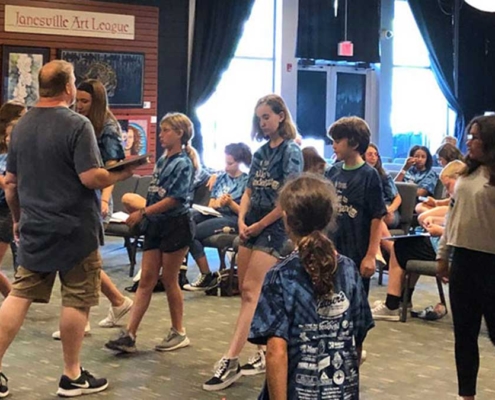 https://hendricksfamilyfoundation.org/wp-content/uploads/2023/10/janesville-performing-arts-center-a.jpg
675
1000
Richard McGrath
https://hendricksfamilyfoundation.org/wp-content/uploads/2023/06/hendricks_family_foundation_logo_wht.png
Richard McGrath2019-07-30 16:44:422026-08-06 17:13:59Hendricks Education Center | Janesville Performing Arts Center
https://hendricksfamilyfoundation.org/wp-content/uploads/2023/10/janesville-performing-arts-center-a.jpg
675
1000
Richard McGrath
https://hendricksfamilyfoundation.org/wp-content/uploads/2023/06/hendricks_family_foundation_logo_wht.png
Richard McGrath2019-07-30 16:44:422026-08-06 17:13:59Hendricks Education Center | Janesville Performing Arts Center